
ADN124 – Emergency Nursing
£597.00 (+VAT)
Develop your critical thinking, clinical reasoning, and advanced nursing skills for managing critically ill and emergency patients. This fully flexible, interactive online course gives you structured guidance and the support you need to provide high-quality care for both your patients and their owners.
15 hours CPD | All sessions recorded | 12 month access.
All of your course materials for this course are available immediately. You have unlimited access to your course materials and the forum for 12 months, however no tutor moderation is now available.
Emergency Nursing
This Advance15TM Emergency Nursing Course will help you to develop your knowledge and skills in a defined area of small animal practice.
Enjoy unlimited access to your course materials for a full 12 months. Get the help you need to deal effectively with your small animal emergency patients. Complete the course and get your CPD / CE Certificate for 15 Hours of learning.
Use your new knowledge and skills straight away in your practice.
Revisit your course materials at any time during your 12 months’ access to refresh your knowledge whenever you have a relevant patient.
Week 1
Session 1: Nurse Triage – Recognising the Critical Patient
Triage is the art and science of recognising which patient needs immediate care. This session explores the structured approach to triage, focusing on rapid primary assessment, recognition of red flags, and efficient communication with clinicians.
Learning Outcomes:
- Apply a systematic A–B–C–D triage protocol to small animal emergencies.
- Identify life-threatening abnormalities on initial assessment.
- Communicate triage findings effectively within the clinical team.
- Prioritise multiple emergencies under pressure with confidence.
Session 2: Kirby’s Rule of 20 – The Daily Critical Checklist
Kirby’s Rule of 20 is a cornerstone of critical care nursing, offering a structured daily evaluation of the hospitalised patient. This session translates theory into practice—how to use it to anticipate deterioration, guide nursing care plans, and communicate clinical priorities.
Learning Outcomes:
- Understand the 20 physiologic parameters and their clinical relevance.
- Integrate Kirby’s Rule into daily ICU rounds and nursing documentation.
- Recognise early warning signs of instability and escalate appropriately.
- Promote a proactive, rather than reactive, nursing approach.
Week 2
Session 1: Pain Scoring and Analgesia in the Critical Patient
Pain control is paramount in any patient under our care. This session covers current assessment methods, multimodal analgesic strategies, and safe analgesic use in unstable or critically ill patients.
Learning Outcomes:
-
- Evaluate and score pain using validated scales across species.
- Select appropriate analgesic strategies for critical patients.
- Safely manage analgesic CRIs and recognise adverse effects.
- Integrated nursing strategies for the painful patient in the ICU.
Session 2: Cardiovascular Emergencies
From hypovolaemia to cardiogenic shock, cardiovascular compromise demands rapid, informed intervention. This session dives into perfusion assessment, ECG interpretation basics, fluid therapy, and nursing roles in managing vasoactive drugs and advanced monitoring.
Learning Outcomes:
-
- Recognise and differentiate the major types of shock.
- Perform and interpret basic perfusion assessments and ECG findings.
- Support fluid and vasoactive therapy safely under clinician supervision.
- Anticipate complications and adjust nursing priorities in cardiovascularly unstable patients.
Week 3
Session 1: Respiratory Emergencies
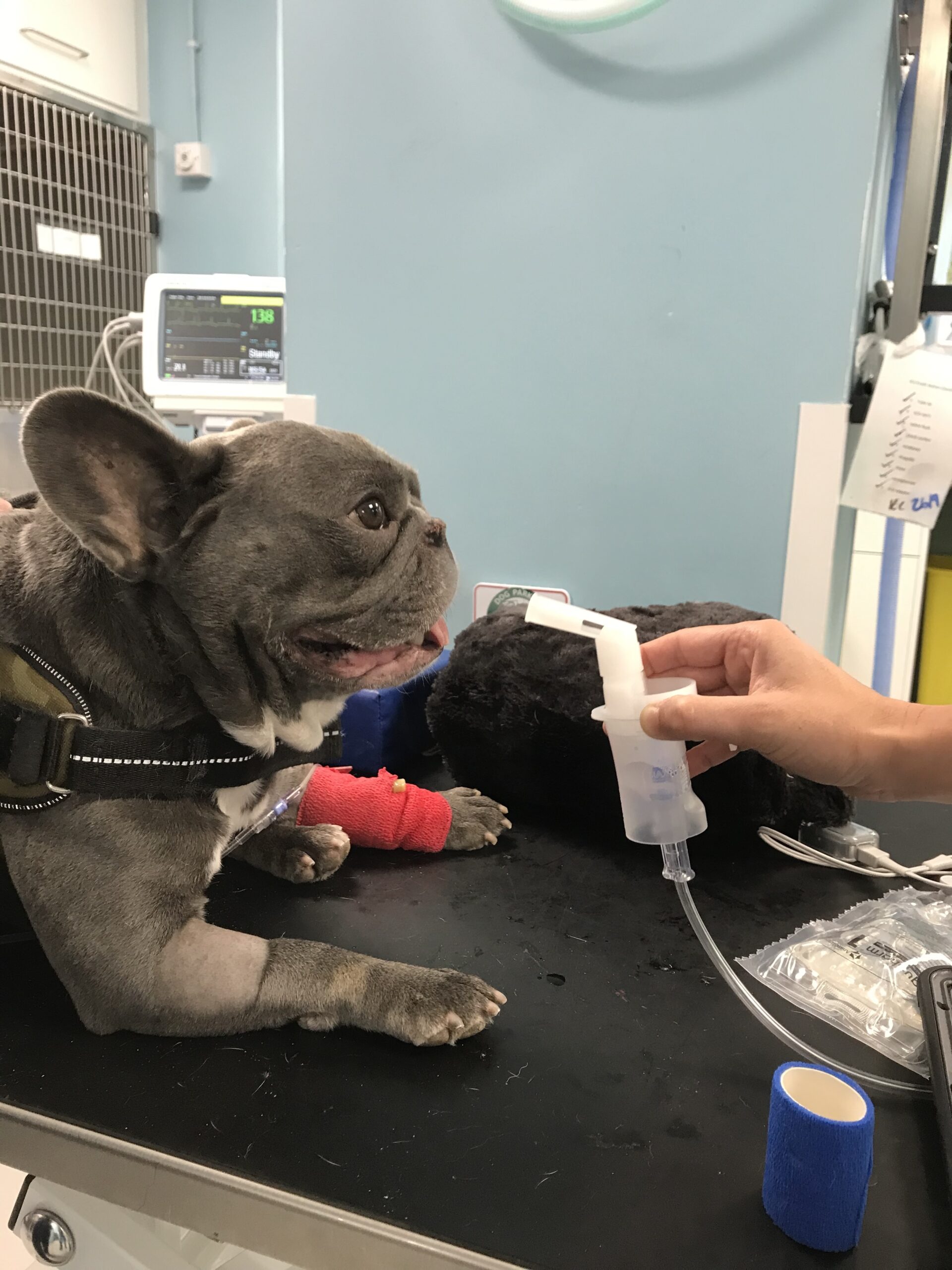
Respiratory emergencies are among the most stressful scenarios nurses face. This session builds confidence in assessing respiratory distress, providing oxygen therapy, and supporting intubated or ventilated patients while minimising stress and oxygen consumption.
Learning Outcomes:
-
- Identify respiratory patterns and localise disease (upper vs lower airway).
- Deliver and monitor oxygen therapy effectively and safely.
- Support patients requiring mechanical ventilation or thoracocentesis.
- Apply low-stress handling to dyspnoeic animals to improve outcomes.
Session 2: Neurological Emergencies
Neurological crises require calm precision. This session focuses on recognising neurological emergencies, seizure management, nursing care of comatose patients, and preventing secondary brain injury through positioning, perfusion, and temperature control.
Learning Outcomes:
-
- Conduct focused neurological triage and recognise red flags.
- Implement nursing protocols for seizure control and head trauma.
- Maintain optimal cerebral perfusion through nursing interventions.
- Support multidisciplinary management of neurological ICU patients.
Week 4
Session 1: Adult CPR
This session goes beyond RECOVER’s basic flowcharts to explore advanced nursing roles during cardiopulmonary resuscitation. Emphasis is placed on leadership, monitoring CPR quality, team communication, and immediate post-resuscitation stabilisation.
Learning Outcomes:
- Recall the key steps and evidence behind the RECOVER CPR guidelines.
- Execute nursing tasks efficiently as part of a resuscitation team.
- Use ETCO₂, ECG, and perfusion markers to assess CPR effectiveness.
- Implement structured debriefing to enhance team performance and outcomes.
Session 2: Neonatal CPR
Neonates are not small adults. This closing session covers the unique physiology of neonatal patients, early identification of distress, and modified CPR and fluid therapy protocols. It concludes with practical tips for ongoing neonatal critical care.
Learning Outcomes:
- Understand species-specific neonatal physiology and vulnerabilities.
- Apply the 2025 Newborn RECOVER guidelines.
- Provide targeted support for hypothermic, hypoglycaemic, or hypoxic neonates.
- Deliver safe, evidence-based neonatal nursing care post-resuscitation.
Tutor
Lara Brunori DVM CertAVP(ECC) DipECVECC MRCVS
European (EBVS) and RCVS recognised Specialist in Veterinary Emergency and Critical Care

Any Questions? Call us now on 0151 328 0444