

MS308: Making the Most of Your Microscopy Mini Series
£547.00 (+VAT)
Designed to support real clinical decisions, this Mini Series helps you get more value from the tools you already have in your practice. You’ll build confidence in in-house pathology, reduce uncertainty in everyday cases, and develop practical habits you can apply immediately and with the reassurance of having the recordings to revisit whenever you need a refresher.
Making the Most of Your Practice Laboratory
An online Mini Series for vets in general small animal practice
This three-part online Mini Series is designed to help you use your in-house laboratory more confidently and effectively in everyday clinical practice. Led by Roger Powell MA VetMB DipRCPath Diplomate ACVP FRCPath MRCVS, the sessions focus on practical cytology, fluid analysis and haematology. The course will help you in accurate decision-making without unnecessary delay or cost.
Across the series, you’ll revisit core techniques, recognise common pitfalls, and build confidence in interpreting what you see under the microscope, using real clinical examples throughout.
This Mini Series includes
• Three online sessions (2 hours each)
• 8 hours of CPD with certification
• Downloadable comprehensive course notes
• Self-assessment quizzes to release your CPD certificate
(quizzes can be retaken as needed)
• 12 months’ access to full session recordings
• Watch on any device, at a time that suits you
Programme
Session 1 – Skin Lumps: Whoops, That Didn’t Need That…
Wednesday 3 June 2026
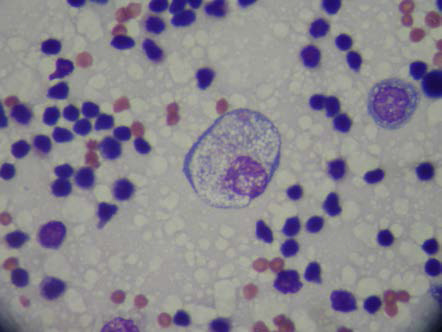
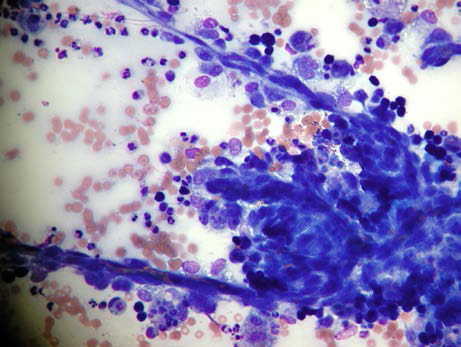
Skin pathology often presents as visible or palpable lumps, but macroscopic appearance alone can be misleading. This session focuses on the use of cytology to distinguish inflammatory, infectious and proliferative processes, helping to guide appropriate intervention and avoid unnecessary procedures.
Topics include:
Microscope setup, smearing and staining techniques
Recognising inflammatory and infectious patterns
Identifying proliferative lesions
Knowing when to refer slide material
Session 2 – Fluid Analysis on Your Own: Rapid In-House Screening
Wednesday 17 June 2026
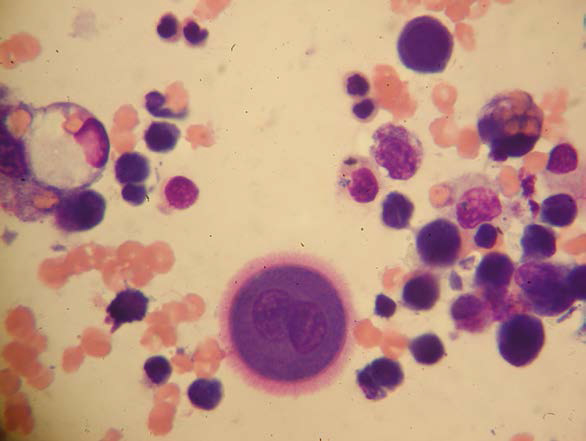
Effusions can present as urgent clinical problems, yet different aetiologies may look similar macroscopically or on imaging. This session shows how practical, consistent in-house microscopy can support timely clinical decisions, while recognising when further external analysis is needed.
Topics include:
Preparing and staining fluid samples
Differentiating inflammatory and haemorrhagic effusions
Recognising infectious causes
Identifying cases requiring referral analysis
Session 3 – Haematology: Preventing Automated Analyser Misdiagnosis
Wednesday 1 July 2026
Automated analysers are valuable tools, but smear evaluation remains essential for accurate veterinary haematology. This session explores common analyser pitfalls using real cases, reinforcing how manual assessment can prevent misdiagnosis and support appropriate treatment.
Topics include:
Types and limitations of analysers
Blood smear evaluation
Morphological assessment of red and white cells
An introduction to leukaemia
Who this Mini Series is for
This Mini Series is suitable for vets working in general small animal practice who want to strengthen their confidence in in-house laboratory work, refresh core skills, and apply practical pathology principles directly to everyday cases.
CPD details
The price includes all three sessions, downloadable notes, quizzes and 8 hours of CPD, with 12 months’ access to the recordings as an ongoing reference.
No travel, accommodation, rota juggling or locum cover — just practical, accessible CPD that fits around practice life.
Course Feedback :
“It will definitely enhance my microscopy skills and our evaluation of diagnostic samples in practice.”
“This course will enable me to feel more confident in looking at cells under the microscope. ”
“I will be more happy to do emergency cytology cases.”
“I will be able to properly prepare samples and stain slides better. Also to look for any preparation faults.”
“I will be more confident in my techniques and identification of blood cells.”
“This course will help me to do an initial assessment in order to decide how best to proceed.”
“It will help me in day-to-day practice and in-house analysis of samples.”
“I will start assessing quality of smears before sending off. Also pcv and blood smear to be included in each cbc.”